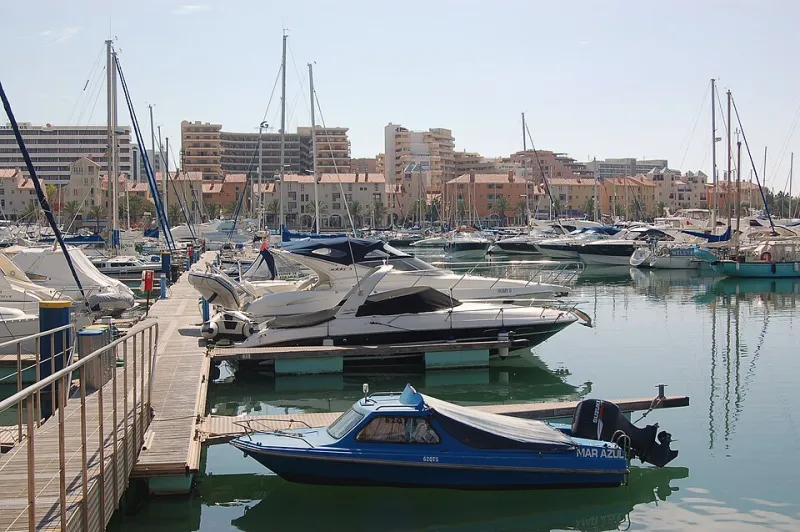
Laptop, Sunscreen, and a Sagres: How Vilamoura Became Portugal's Quiet Remote Work Secret
Photo: San Diego Air & Space Museum Archives, Public domain, via Wikimedia Commons
Most digital nomads following the Portugal trail tend to stop in Lisbon or Porto. They land, fall in love with the tiles and the pastéis de nata, and start hunting for apartments in Alfama before their first week is up. Vilamoura rarely makes the shortlist. And honestly? That's a feature, not a bug.
Because while the capital is dealing with overtourism, skyrocketing rents, and the logistical chaos of a major city, Vilamoura has quietly built out the kind of infrastructure that actually makes remote work work — without sacrificing any of the lifestyle perks that made you want to leave your cubicle in the first place.
Here's what you need to know before you pack your laptop and book that one-way ticket.
The Internet Situation Is Better Than You Think
Let's get the most practical question out of the way first. Vilamoura's connectivity has improved dramatically over the past few years. Fiber optic internet is widely available across the marina district and most residential complexes, and speeds that support video calls, large file transfers, and cloud-based workflows are genuinely the norm rather than the exception.
Most hotels and aparthotels in the area now market directly to longer-stay guests and remote workers, offering monthly rates that include high-speed WiFi as a given. If you're renting a villa or apartment for a month or two through platforms like Uniplaces or even direct local agencies, always confirm fiber availability — but in the newer developments clustered around the marina, you're almost certainly going to be fine.
For backup purposes, Portuguese SIM cards from NOS or MEO are cheap and widely available. A local data plan gives you a solid LTE safety net for the days you want to work from a café terrace rather than your kitchen table.
Where to Actually Work (When Home Gets Old)
This is where Vilamoura differs from a typical nomad hub like Medellín or Chiang Mai: dedicated co-working spaces are limited. There's no WeWork on every corner. But that's not quite the problem it sounds like.
The marina area has a handful of cafés and hotel lobbies that have quietly become default remote work spots for longer-stay visitors. Places with good natural light, reliable WiFi, and staff who won't side-eye you for nursing an espresso through a two-hour Zoom call. The terrace culture here is real — many spots are designed for lingering.
For more structured co-working, the nearby city of Loulé (about 20 minutes inland) has proper shared office facilities, and Faro — the regional capital, roughly 25 minutes away — has a growing co-working scene that's worth exploring if you need a serious heads-down work environment a few days a week. Plenty of remote workers based in Vilamoura treat this as their rhythm: productive mornings at home or a local café, occasional Faro days for focus or meetings, and afternoons that belong entirely to the Atlantic.
The Visa Question: Portugal's D8 and Why It Matters
If you're a US citizen planning to work remotely from Portugal for more than 90 days, you'll need to sort your legal status before you go. Portugal introduced its Digital Nomad Visa (officially the D8 Remote Work Visa) in 2022, and it remains one of the more accessible options for American remote workers.
To qualify, you'll need to demonstrate a minimum monthly income — currently set at four times the Portuguese national minimum wage, which works out to roughly $3,200 per month as of 2024, though this can shift, so verify current requirements through the Portuguese consulate. You'll also need proof of remote employment or freelance contracts, health insurance, and a clean criminal record.
The visa initially grants a one-year stay, renewable, and after five years of legal residency you can apply for permanent residency or citizenship. Portugal's Non-Habitual Resident (NHR) tax regime — which historically offered significant tax advantages to new residents — has been modified in recent years, so consulting a cross-border tax professional before making any decisions is genuinely important. Don't rely on Reddit threads for this one.
The Cost of Living Comparison That'll Make You Do the Math
Vilamoura isn't the cheapest place in Portugal — it's a resort town, and prices reflect that. But compared to major US cities where remote workers tend to cluster, the numbers are striking.
A comfortable one-bedroom apartment in the marina area typically runs between $1,200 and $1,800 per month on a longer-term rental. Groceries at local supermarkets like Continente or Pingo Doce run roughly 30 to 40 percent less than equivalent shopping in a US city. A proper sit-down lunch at a local restaurant — not a tourist trap, but a real restaurante — will set you back $12 to $18 with a drink included. Dinner at a nicer marina spot is more, obviously, but even then you're rarely paying New York prices.
Healthcare, if you're paying out of pocket while your visa situation is being sorted, is also significantly cheaper than US private care. Many expats and longer-stay visitors use private clinics in Vilamoura or nearby Quarteira for routine needs, with consultations often running $60 to $100.
The Lifestyle Case: Why This Place Sticks
Here's the thing that no productivity spreadsheet fully captures: Vilamoura is genuinely, almost absurdly pleasant to live in.
The marina is walkable. The beaches — Vilamoura Beach, Falésia, Quarteira — are some of the best in the Algarve, and they're right there. The town is safe, well-maintained, and quiet enough outside peak summer months that you can actually think. The food scene, while not as adventurous as Lisbon's, is solid and getting better. And the golf, if that's your thing, is world-class.
There's also something to be said for the pace. Portugal operates on a different clock than the US, and after the initial adjustment, most remote workers find it genuinely resets their relationship with work. You stop grinding through lunch. You take the afternoon walk seriously. You actually use the weekend. Productivity doesn't necessarily suffer — for a lot of people, it quietly improves.
American remote workers who've spent time here often describe a version of the same revelation: they came planning to stay two months, and started looking at apartment leases by week six.
Practical Starting Points
If you want to test the waters before committing to a longer stay, a four to six week trial run during the shoulder season — think October through November, or March through April — is the move. Prices are lower, the crowds are gone, the weather is still genuinely lovely, and you'll get a realistic picture of what daily life actually looks like.
Book an aparthotel or short-term rental rather than a hotel so you have a kitchen and a proper desk setup. Get a local SIM on day one. Take a day trip to Faro to scope out the co-working situation. And give yourself at least one slow Tuesday afternoon with nothing scheduled — that's when Vilamoura tends to make its case most persuasively.
The remote work revolution promised us the freedom to work from anywhere. Vilamoura is a pretty compelling answer to the question of where anywhere should be.