They Came for a Vacation and Never Left: Six Americans on Life in Vilamoura

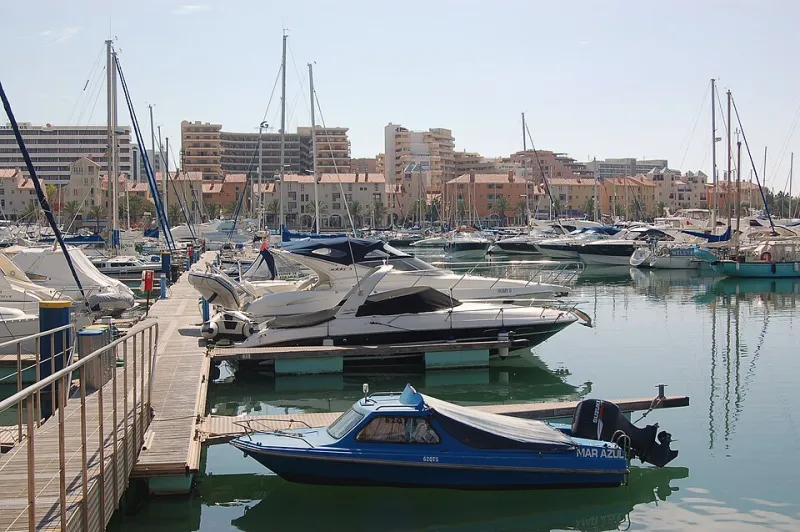
Photo by Photo by Anthony R. on Unsplash on Unsplash
It usually starts the same way. A vacation that goes a little too well. A sunset over the marina that lasts a little too long in the memory. A dinner where the bill arrives and someone at the table does the math out loud and everyone goes quiet for a moment.
For a growing number of Americans, Vilamoura isn't just a destination anymore. It's home. Portugal has become one of the most popular relocation choices for US citizens over the past decade, and the Algarve — with Vilamoura at its glamorous center — attracts a disproportionate share of them. We tracked down six Americans at very different life stages who made the move, and asked them to be honest: the good, the frustrating, and the stuff the Instagram posts don't show.
Carol and Jim, 68 and 71 — Retired Teachers from Ohio
Carol and Jim spent 35 years in Columbus classrooms. They'd traveled to Portugal twice before retiring and kept saying "someday" until Jim's 70th birthday trip to the Algarve made someday feel irresponsible to keep postponing.
"We sat down with a spreadsheet," Carol says. "Our pensions, Social Security, what we'd get for the house in Columbus. We ran the numbers three different ways. Every single way, Portugal made more sense."
They've been in Vilamoura for two years now, renting a two-bedroom apartment near the Old Village for €1,400 a month — a figure that consistently shocks their friends back home. Healthcare has been their biggest adjustment, not because it's bad, but because it's different. They're enrolled in Portugal's public health system through their residency and supplement it with private health insurance that costs them about €180 a month combined.
"The public system works, but the wait times can be long for non-emergency things," Jim says. "The private insurance gets us into a clinic same-day for most things. It's still less than our Medicare gap coverage was back home."
What they didn't expect: how socially rich their lives would become. "We thought we'd be lonely," Carol admits. "We have more of a social life here than we did in Columbus. There's a huge expat community. People are very open to friendship when you're all in the same boat."
Marcus, 34 — Remote Software Engineer from Austin
Marcus was already working remotely when the pandemic hit, and like a lot of tech workers, he spent 2020 and 2021 asking himself why he was paying Austin rent for an apartment he barely left. He landed in Vilamoura in 2022 on a 90-day tourist visit, liked it, and applied for Portugal's Digital Nomad Visa before his time was up.
"The visa process was annoying," he says plainly. "I'm not going to sugarcoat it. There's paperwork, you need to prove income — the threshold for a single person is around four times Portugal's minimum wage, so roughly €3,280 per month — and the consulate appointments in the US can be backed up for months."
But once he was through it, life got considerably simpler. His rent for a one-bedroom near the marina: €950 a month. His monthly expenses total, including dining out regularly: around €2,200. His Austin expenses for a comparable lifestyle: closer to €3,800 at current exchange rates.
"I can walk to the beach in eight minutes," he says. "I golf twice a week. The food is insane. I make the same money I did in Texas. I genuinely don't understand why more people in my situation aren't doing this."
The honest challenge for Marcus has been the language. "Portuguese is hard. I've been taking lessons for a year and I'm functional but not comfortable. Most people in Vilamoura speak English, so it's easy to coast — which is also the problem. You have to make yourself practice."
The Nguyen-Garcias — Family of Four from San Diego
Laura and Daniel moved to Vilamoura with their two kids (now 9 and 12) in 2021, driven partly by a desire to give their children a different kind of childhood and partly by the brutal San Diego real estate market that was pushing homeownership further out of reach every year.
"We were renting in San Diego for $3,400 a month for a three-bedroom," Laura says. "Here we're in a four-bedroom house with a pool for €1,800. We own it. We bought it."
The kids attend a local Portuguese school, which the family sees as both a challenge and the point. "The first year was hard for them," Daniel says. "Really hard. But now they're both essentially bilingual. That alone feels like the most valuable thing we've ever given them."
The family's biggest surprise has been the healthcare system for children. "Pediatric care here is excellent and it's cheap," Laura says. "We've never once worried about a doctor's visit or a prescription. The system is just so much less stressful than navigating US insurance."
What they miss: Target. Their families. Mexican food that isn't a pale imitation. "The food here is incredible," Daniel laughs, "but sometimes you just want a proper taco, and there's no solving that problem."
Diane, 57 — Semi-Retired Interior Designer from New York
Diane describes herself as someone who "took the leap before it felt completely rational" and has no regrets about it. She'd sold her Manhattan apartment at a good time, done some consulting work that she could handle remotely, and decided at 54 that she didn't want to wait until 65 to start living differently.
She applied for Portugal's D7 Passive Income Visa, which is designed for people with reliable income from investments, rental properties, or pensions. "You need to show roughly €760 a month in passive income for a single person," she explains. "That's the baseline. In practice, they like to see more. I showed my investment income and a rental property income from a place I kept in Brooklyn, and it was fine."
Vilamoura appealed to her specifically because it's beautiful without being sleepy. "I'm not a small-town person. I like design, I like good restaurants, I like seeing well-dressed people. Vilamoura has that energy. It's not Lisbon, but it's not a retirement village either."
Her ongoing challenge is feeling fully integrated. "The expat community is lovely but it's its own bubble. I've worked hard to have Portuguese friends and neighbors, and I have some, but it takes real effort. You can live here for years and only know other Americans if you're not deliberate about it."
Robert, 44 — Former Financial Advisor from Chicago
Robert moved to Vilamoura three years ago after burning out spectacularly in his Chicago career. He now does some consulting, manages some investments, and spends a significant portion of his time on the golf courses that surround the town — a fact he is not remotely apologetic about.
"I played golf maybe ten times a year in Chicago," he says. "Here I play three or four times a week. The courses are world-class. The greens fees are a fraction of what I'd pay at a comparable US club. It's embarrassing how good my handicap has gotten."
Robert's advice for Americans considering the move is blunt: sort out your taxes before you go. "The US taxes its citizens on worldwide income no matter where you live. You cannot escape that. What Portugal offers is its NHR program — Non-Habitual Resident — which can significantly reduce your Portuguese tax burden for the first ten years. But you need a tax advisor who understands both US and Portuguese law. I cannot stress this enough. Get the right accountant before you move, not after."
What They All Agree On
Six very different people, six very different stories. But ask them what they'd tell a friend considering the move and certain themes come up every time.
Do your visa homework early. Consulate appointments in the US can be booked out three to six months. Start the process long before you plan to move.
Rent before you buy. Even those who eventually purchased property — like the Nguyen-Garcias — recommend renting for at least a year first. Neighborhoods, noise levels, and lifestyle fit all reveal themselves over time.
Get a Portuguese accountant and a US expat tax advisor. The financial complexity of living abroad as an American is real and non-negotiable.
Learn some Portuguese. Even imperfect effort is noticed and appreciated.
Expect the first year to be harder than the Instagram version suggests. Every single person we spoke to described a period of disorientation, homesickness, or bureaucratic frustration. Every single one of them also said they'd do it again without hesitation.
"The life I have here," Carol from Ohio says, pausing to find the right words, "I didn't know it was possible. I thought you worked until you were too tired to enjoy anything, and then you retired. This is something else entirely. It just took getting on a plane to find it."