Sun, Savings, and Sanity: The Practical American's Retirement Blueprint for Vilamoura

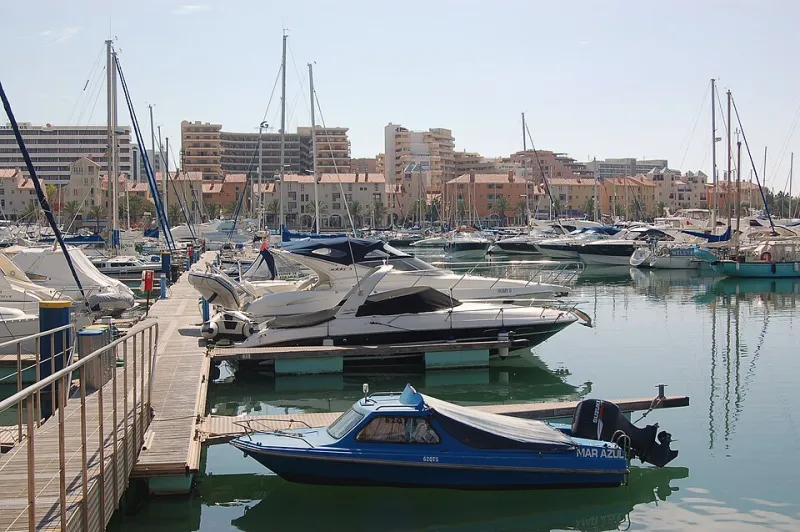
Photo: Retired electrician, CC0, via Wikimedia Commons
Retirement planning used to mean one thing: figure out when you can stop working, then find a quiet corner of the US to ride it out. Maybe Florida. Maybe Arizona. Somewhere warm, somewhere familiar, somewhere with a good early bird dinner special.
That calculus is changing. Healthcare costs, housing prices, and a creeping sense that American retirement culture doesn't quite match what people actually imagined for themselves have pushed a growing number of retirees to look harder at international options. And Portugal — consistently ranked among the world's best countries for expat retirees — keeps showing up at the top of the results.
Vilamoura specifically is worth a closer look. Not just as a vacation spot you've loved for years, but as a place you could actually live.
Why Vilamoura and Not Just "Portugal"
Portugal is a big country with a lot of great places to retire. Lisbon is vibrant and cosmopolitan. The Silver Coast has a rugged, authentic character. The Douro Valley is impossibly beautiful. So why Vilamoura?
A few reasons. First, the infrastructure here is purpose-built for comfortable, leisure-oriented living in a way that more rural or urban alternatives aren't. The marina district is walkable, well-maintained, and genuinely pleasant to move through on a daily basis. Healthcare access is reasonable — more on that shortly. There's an established international community, which means the social isolation that derails some expat retirements is less of a risk here than in more remote locations.
And perhaps most practically: Vilamoura already has a large population of longer-term foreign residents, which means the local service economy — from legal help to property management to English-speaking doctors — has evolved to accommodate people like you. The infrastructure for the expat life is already here.
The Numbers: What Retirement in Vilamoura Actually Costs
Let's be direct about cost of living, because vague claims about Portugal being "affordable" aren't particularly useful when you're trying to build a real budget.
Vilamoura is one of the pricier parts of Portugal — it's a resort town, and that's reflected in property and rental markets. But the comparison to US retirement destinations is still striking.
Housing: A two-bedroom apartment in or near the marina typically runs $1,500 to $2,500 per month on a longer-term rental. Purchase prices for comparable properties generally range from $350,000 to $700,000 depending on proximity to the water and property condition — competitive with, or well below, comparable coastal US markets.
Daily expenses: Groceries, dining, and utilities run meaningfully less than equivalent spending in most US metro areas. A couple living comfortably — eating out several times a week, running the air conditioning in summer, maintaining a car — can often manage on $3,500 to $5,000 per month total, depending on lifestyle. That number would look very different in, say, coastal California or South Florida.
Healthcare: This is often the number that makes the strongest case. Portugal's public healthcare system is available to legal residents, and while wait times for some services can be longer than ideal, private healthcare is both excellent and dramatically cheaper than US private care. Many expat retirees in the Algarve use a combination of Portuguese private insurance and continued US Medicare (noting that Medicare generally doesn't cover care abroad) or a supplemental international health policy. A solid private health insurance plan for a healthy retiree in their 60s often runs $150 to $300 per month — a fraction of comparable US coverage.
Residency Options: What the Paperwork Actually Looks Like
The most common legal pathway for American retirees to Portugal is the D7 Passive Income Visa, sometimes called the Retirement Visa or Passive Income Visa. It's designed for people who can demonstrate sufficient income without needing to work in Portugal — which covers most retirees drawing Social Security, pension income, or investment distributions.
The income threshold has varied over time, but as a general benchmark, demonstrating around $1,500 to $2,000 per month in regular income per person has historically been sufficient, though requirements can shift and you should verify current minimums through the Portuguese consulate or an immigration attorney.
The process involves gathering documentation — proof of income, criminal background check, health insurance, proof of accommodation in Portugal — and applying through the Portuguese consulate in your region before you travel. Once approved, you'll move to Portugal and complete the residency registration process there.
After five years of legal residency, permanent residency and eventual citizenship become available. Portuguese citizenship also confers EU citizenship, which has its own set of long-term benefits worth understanding.
One important note: the NHR (Non-Habitual Resident) tax regime that previously attracted many foreign retirees with favorable tax treatment on foreign income has been significantly modified. Tax planning for US citizens retiring abroad is genuinely complex — the US taxes its citizens on worldwide income regardless of where they live — so working with a CPA experienced in US expat taxation before making any moves is non-negotiable.
Healthcare Access in the Algarve
The Algarve's healthcare infrastructure has improved considerably, partly because the region's large international population created demand for English-speaking medical professionals and higher-end private facilities.
Vilamoura and the surrounding area have private clinics handling routine care, and the Hospital Particular do Algarve in Alvor (roughly 50 minutes west) is the region's main private hospital with a solid reputation among expats. For more complex procedures, Lisbon's major hospitals are a direct two-hour drive or a short flight.
Most long-term residents in the Algarve build a healthcare plan around a combination of local private insurance, a trusted English-speaking GP in the area, and a willingness to travel to Lisbon or even Spain's Costa del Sol for specialist care when needed. It's a different model than the US, but for most healthy retirees, it works well and costs significantly less.
Staying Connected to Home
One of the genuine emotional challenges of retiring abroad is the distance from family and the rhythms of American life. Vilamoura's time zone — Western European Time, which is five to eight hours ahead of US time zones depending on daylight saving — means mornings in Portugal overlap with afternoons or evenings back home, which most expats find workable for regular calls and video chats.
Direct flights from major US hubs to Lisbon have expanded significantly, and from Lisbon, Faro (Vilamoura's regional airport) is a 30-minute connection or a two-hour drive. The trip is long but increasingly manageable, and many expat retirees settle into a rhythm of one or two extended US visits per year.
Streaming services, US news, and staying plugged into American culture is genuinely not difficult in 2024. The infrastructure of staying connected has never been easier.
The Honest Reality Check
Vilamoura retirement isn't for everyone. If you're deeply rooted in a US community — grandchildren nearby, decades of friendships, strong local identity — the emotional weight of distance is real and shouldn't be minimized. Bureaucratic processes in Portugal move slowly, and navigating them in a language you may not speak fluently requires patience and often professional help.
But for retirees who are mobile, open to a different kind of life, and honest with themselves about what they actually want from this chapter — warmth, beauty, lower costs, a slower pace, genuine quality of life — Vilamoura makes a compelling argument.
The marina at sunset, a glass of local wine, dinner for two that costs less than a weeknight pizza delivery back home, and the Atlantic glittering just beyond the breakwater.
That's not a vacation fantasy. For a growing number of Americans, it's just a Tuesday.